


Vanitas (Memento Mori) Bust carved in marble, Italy
13 3/4 x 14 1/8 x 6 3/4 in
Further images
-
(View a larger image of thumbnail 1
)

-
(View a larger image of thumbnail 2
)

-
(View a larger image of thumbnail 3
)
-
(View a larger image of thumbnail 4
)

-
(View a larger image of thumbnail 5
)

-
(View a larger image of thumbnail 6
)
-
(View a larger image of thumbnail 7
)
-
(View a larger image of thumbnail 8
)

-
(View a larger image of thumbnail 9
)
-
(View a larger image of thumbnail 10
)

-
(View a larger image of thumbnail 11
)
-
(View a larger image of thumbnail 12
)
-
(View a larger image of thumbnail 13
)

-
(View a larger image of thumbnail 14
)
english-french-dutch-german:
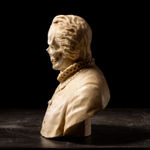
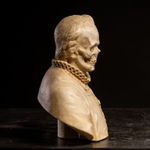
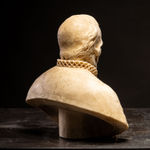
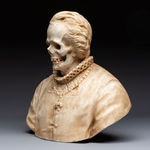
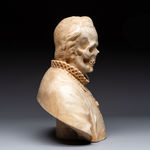
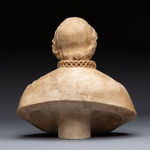
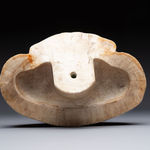
This marble bust unites worldly refinement and death in a single figure. The carefully carved costume and jewelry suggest social status and personal identity, while the skull replaces the living face. Such works belong to the tradition of vanitas or memento mori (“remember you must die”), intended to prompt reflection on the transience of life, wealth, and reputation.Comparable in meaning to Baroque vanitas still-life paintings—where skulls, timepieces, and extinguished candles symbolize mortality—this sculpture transforms those emblems into an embodied confrontation. Its modest scale suggests private contemplation, while the virtuosity of the carving intensifies the tension between permanence in stone and the inevitability of decay.Sculptural memento mori objects were produced in a range of materials and scales, from small devotional carvings to life-size skulls intended for study or contemplation. At 35 cm in height, this example likely functioned as a private object rather than a public monument, encouraging intimate reflection. The choice of marble underscores the paradox at the heart of the work: an enduring material employed to communicate impermanence.The technical finesse of the carving—softly modeled drapery, precise surface detailing, and anatomically legible bone—aligns the bust with the lingering Baroque taste. Rather than a purely macabre image, the sculpture serves as a philosophical reminder, confronting viewers with the tension between identity, time, and death.
Ce buste en marbre unit le raffinement mondain et la mort en une seule figure. Le costume et les bijoux finement sculptés suggèrent le statut social et l’identité personnelle, tandis que le crâne remplace le visage vivant. De telles œuvres s’inscrivent dans la tradition des vanités ou memento mori (« souviens-toi que tu mourras »), destinées à susciter une réflexion sur la nature éphémère de la vie, de la richesse et de la renommée.Comparable par son sens aux peintures de vanités baroques — où crânes, instruments de mesure du temps et bougies éteintes symbolisent la mortalité — cette sculpture transforme ces emblèmes en une confrontation incarnée. Son échelle modeste suggère une contemplation privée, tandis que la virtuosité de la taille accentue la tension entre la permanence de la pierre et l’inéluctabilité de la décomposition.Les objets sculptés de type memento mori furent réalisés dans une grande variété de matériaux et de formats, allant de petites sculptures dévotionnelles à des crânes grandeur nature destinés à l’étude ou à la méditation. Mesurant 35 cm de hauteur, cet exemple devait vraisemblablement servir d’objet privé plutôt que de monument public, favorisant une réflexion intime. Le choix du marbre souligne le paradoxe au cœur de l’œuvre : un matériau durable employé pour exprimer l’impermanence.La finesse technique de la sculpture — draperies souplement modelées, précision du traitement de surface et rendu anatomique lisible de l’os — rattache le buste à un goût baroque persistant. Loin d’une image purement macabre, l’œuvre se présente comme un rappel philosophique, confrontant le spectateur à la tension entre identité, temps et mort.
Deze marmeren buste verenigt wereldse verfijning en de dood in één enkele figuur. Het zorgvuldig gesneden kostuum en de sieraden verwijzen naar sociale status en persoonlijke identiteit, terwijl de schedel het levende gezicht vervangt. Dergelijke werken behoren tot de traditie van vanitas of memento mori (“gedenk dat gij sterfelijk zijt”), bedoeld om te wijzen op de vergankelijkheid van leven, rijkdom en reputatie.In betekenis vergelijkbaar met barokke vanitas-stillevens — waarin schedels, tijdmeters en gedoofde kaarsen de sterfelijkheid symboliseren — zet deze sculptuur die emblemen om in een belichaamde confrontatie. Het bescheiden formaat wijst op privé-beschouwing, terwijl de virtuositeit van het snijwerk de spanning versterkt tussen de duurzaamheid van steen en de onvermijdelijkheid van verval.
Sculpturale memento mori-objecten werden vervaardigd in uiteenlopende materialen en formaten, van kleine devotionele snijwerken tot levensgrote schedels bedoeld voor studie of contemplatie. Met een hoogte van 35 cm functioneerde dit exemplaar vermoedelijk als een privéobject in plaats van als een openbaar monument, en moedigde het een intieme vorm van reflectie aan. De keuze voor marmer onderstreept de paradox in het hart van het werk: een duurzaam materiaal ingezet om vergankelijkheid uit te drukken.De technische verfijning van het snijwerk — soepel gemodelleerde draperieën, precieze oppervlakdetails en een anatomisch leesbare weergave van het bot — plaatst de buste binnen een voortlevende barokke smaak. In plaats van louter macaber te zijn, fungeert de sculptuur als een filosofische herinnering, die de toeschouwer confronteert met de spanning tussen identiteit, tijd en dood.
Diese Marmorbüste vereint weltliche Raffinesse und den Tod in einer einzigen Figur. Das sorgfältig gearbeitete Gewand und der Schmuck verweisen auf gesellschaftlichen Status und persönliche Identität, während der Schädel das lebendige Gesicht ersetzt. Solche Werke stehen in der Tradition der Vanitas oder des Memento mori („Gedenke, dass du sterben musst“) und sollen zur Reflexion über die Vergänglichkeit von Leben, Reichtum und Ruhm anregen.In ihrer Bedeutung mit barocken Vanitas-Stillleben vergleichbar — in denen Schädel, Zeitmesser und erloschene Kerzen die Sterblichkeit symbolisieren — verwandelt diese Skulptur jene Embleme in eine körperlich erfahrbare Konfrontation. Ihr bescheidenes Format weist auf private Betrachtung hin, während die Virtuosität der Ausführung die Spannung zwischen der Dauerhaftigkeit des Steins und der Unausweichlichkeit des Verfalls verstärkt.Skulpturale Memento-mori-Objekte wurden in unterschiedlichen Materialien und Größen geschaffen, von kleinen Andachtsarbeiten bis hin zu lebensgroßen Schädeln, die dem Studium oder der Kontemplation dienten. Mit einer Höhe von 35 cm fungierte dieses Beispiel vermutlich als privates Objekt und nicht als öffentliches Monument und förderte eine intime Auseinandersetzung. Die Wahl des Marmors unterstreicht das zentrale Paradox des Werkes: ein dauerhaftes Material, das zur Darstellung von Vergänglichkeit verwendet wird.Die technische Raffinesse der Ausführung — weich modellierte Draperien, präzise Oberflächengestaltung und anatomisch klar lesbare Knochenformen — verbindet die Büste mit einem nachwirkenden barocken Geschmack. Anstatt ein rein makabres Bild zu sein, dient die Skulptur als philosophische Mahnung und konfrontiert den Betrachter mit der Spannung zwischen Identität, Zeit und Tod.
Provenance
Private collectionJoin our mailing list
* denotes required fields
We will process the personal data you have supplied in accordance with our privacy policy (available on request). You can unsubscribe or change your preferences at any time by clicking the link in our emails.